
What’s Next?
Nyetimber’s 1998 Blanc de Blancs may show the way for serious English sparkling wine.
“Without a doubt the best sparkling wine I have ever tasted!”
Richard Juhlin on 2003 Nyetimber Blanc de Blancs
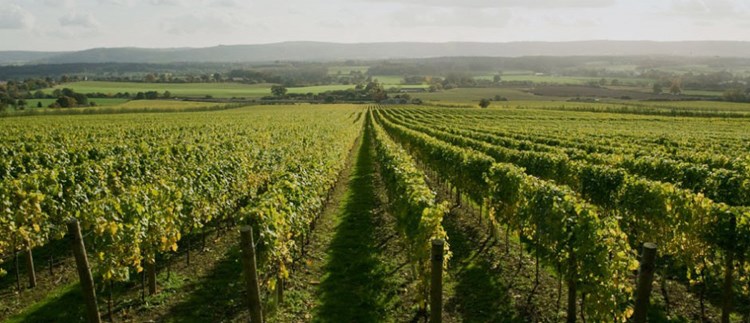
In 2015, the wine world loosened just slightly from its moorings when Taittinger announced that it was planting Chardonnay, Pinot Noir and Pinot Meunier on a south-facing slope in the county of Kent, England.
Hedging its bets in a time of rising temperatures, Taittinger was attracted by Kent's soil—the northernmost extension of the same thick chalk formation that underlies the Marne—and a climate cooler than Champagne’s.
Taittinger’s move confirmed rumors we’d been hearing for years that Champagne’s grandes marques were looking to England’s southeast coast as the next great place for sparkling wine. And it was arguably the most stunning example of how changing weather patterns are influencing the world's view of terroir.
Taittinger was also inspired by the small group of pioneers who, in the 1980s and 1990s, first attempted to make serious English sparkling wine. The most important of these was Nyetimber.
We've long been curious about the progress being made in England, especially by Nyetimber. Then opportunity finally knocked, as we acquired a few mint cases of the outstanding and now rare 1998 Nyetimber Blanc de Blancs, disgorged in 2012 after 14 years on the lees. What better way to find out what all the fuss is about?
A Visionary Idea
It took an imaginative American couple, Stuart and Sandy Moss, to see the potential of making sparkling wine of the Southern coast of England. Mentioned in the 12th-century Domesday Book survey, Nyetimber is one of southern England’s historic estates, at one time home to Anne of Cleves, Henry VIII’s fourth wife.
But the Mosses had a new idea for Nyetimber when they bought the estate in 1986: “to make the finest English sparkling wine” and “rival the best in the world, including Champagne.” And they were willing to take risks to do so.
True pioneers, they were the first in England to exclusively plant the three classic varieties of Champagne—Chardonnay, Pinot Noir and Pinot Meunier—in 1988, at a time when the conventional wisdom was that England was too cold for them.
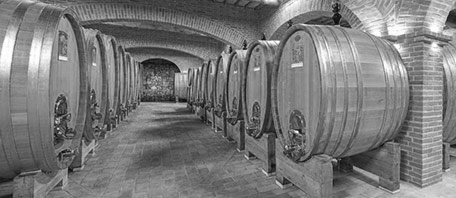
And they brought in a true son of Champagne, Jean-Manuel Jacquinot—descendant of an Epernay winemaking family dating back to the 1600s—to manage the vineyards and the cellars. Between the great chalky terroir and Jacquinot’s skill, featuring no malolactic fermentation and extended lees aging, acclaim was quick to come.
The inclusion of the first release, the 1992 Blanc de Blancs, in a 1997 blind tasting resulted in a debate regarding what area in France it had come from. And the subsequent wines—likewise easily mistaken for Champagne—have met with rave reviews, particularly from prominent British wine writer Jamie Goode, as well as international medals and the admiration of Britain’s Royal Family and visiting Heads of State.
But the greatest praise came from one of the world’s foremost experts on Champagne and sparkling wine, Sweden’s Richard Juhlin, who proclaimed the 2003 Nyetimber Blanc de Blancs “without a doubt the greatest sparkling wine I have ever tasted!”
The earlier 1998 doesn’t fall far short of the 2003’s excellence, earning consistent cellartracker scores in the low 90s. Its excellent balance of chalky minerality, floral perfume and rich toastiness, and the gracefulness with which it has aged are impressive.